
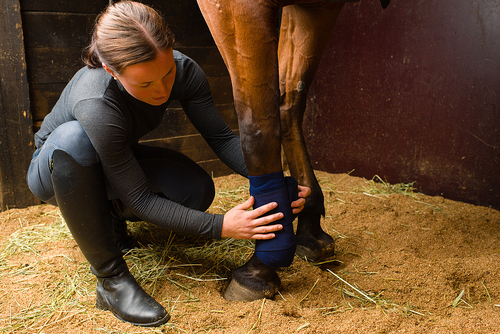
What to do when your horse has a wound
1. Stay calm and assess the wound
Check how deep it is.
- Look for bleeding, swelling, heat, or debris (wood, wire, dirt, hair).
- Note location - wounds near joints, tendons, or the hoof are higher‑risk.
2. Stop any active bleeding
- Apply firm pressure with clean gauze or a towel for several minutes.
- If bleeding does not slow, contact your vet.
3. Clean the wound
- Rinse gently with clean water or saline.
- Remove mud, dirt, hair, or debris.
- Avoid scrubbing - it damages healing tissue.
4. Use a mild antiseptic
- Diluted chlorhexidine or betadine (weak tea colour).
- Avoid hydrogen peroxide long‑term - it delays healing.
- Support healing with Horse Mend
How Horse Mend fits in
Horse Mend supports:
- Wounds
- Infections
- Tissue trauma
- Slow‑healing or dirty wounds
- Skin repair across different body areas
- How to give it
- After cleaning and antiseptic:
- Give Horse Mend by mouth,or add it to the horse’s food or water.
- This provides internal support for healing, inflammation control, and infection resistance - without applying anything directly to the wound surface.
6. Bandage if appropriate
Bandage when:
- The wound is on the leg
- The wound is on the lower body
- The area will get dirty or rubbed
- Change bandage daily, or sooner if wet.
7. Keep the horse in a clean environment
- Dry paddock or stable.
- Avoid mud, long grass, or areas where the wound can be contaminated.
Watch for infection
Signs include:
- Heat
- Swelling
- Pus
- Bad smell
- Increasing soreness or lameness
- Fever or dull behaviour
- If any appear, call your vet.
Bandaging
- Essential for lower‑leg wounds or dirty environments.
- Change daily.
Fly control
- Critical to prevent infection and proud flesh.
Tags:
horses





 Earn loyalty points everytime you shop